
Understanding the Core Technology: CT Scanner Baggage Screening vs. Traditional X-Ray
Airport security has evolved dramatically over the past decade, and the debate between CT scanner baggage screening and conventional X-ray baggage scanners is now front and center for procurement teams and airport operators worldwide. Making the right choice in 2025 depends on understanding not just the technology, but the operational, regulatory, and cost implications of each system.
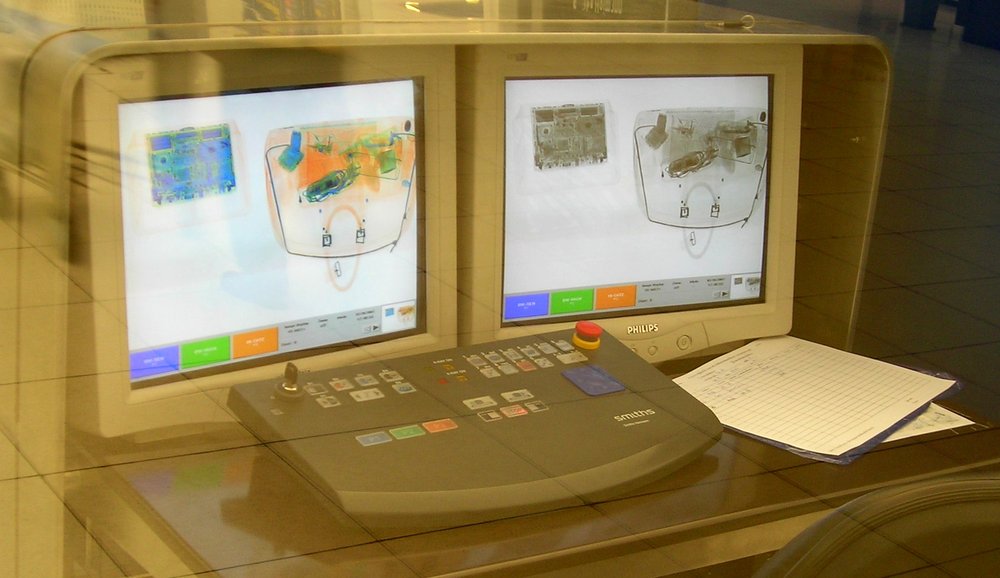
Traditional X-ray baggage scanners produce a two-dimensional image of bag contents, relying heavily on operator interpretation to flag suspicious items. CT (Computed Tomography) scanners, by contrast, generate full 3D volumetric images that can be rotated, sliced, and analyzed from any angle — dramatically improving threat detection accuracy.
How CT Scanners Work in Airport Security
CT scanner baggage screening systems use rotating X-ray sources and detectors to capture hundreds of cross-sectional images of a bag in a single pass. These images are reconstructed by onboard software into a precise 3D model, enabling automated detection algorithms to assess density, shape, and material composition simultaneously.
This automated analysis is what separates CT from legacy 2D X-ray: the system can calculate the atomic number and mass density of objects, comparing them against known threat profiles in real time. Human operators are still in the loop, but they are reviewing flagged items rather than scanning every image manually — a significant efficiency gain for high-throughput checkpoints.
Key Differences: CT vs. X-Ray Airport Screening at a Glance
- Image Dimensionality: CT produces full 3D volumetric imaging; X-ray generates 2D projections requiring operator interpretation.
- Explosive Detection: CT systems are certified as Explosive Detection Systems (EDS) by the TSA; standard 2D X-ray units are not.
- False Alarm Rate: CT scanner technology reduces false alarm rates by up to 50% compared to conventional X-ray, reducing costly manual bag searches.
- Laptop & Liquid Rules: TSA-certified CT lanes allow passengers to keep laptops and liquids inside carry-on bags — a major passenger experience improvement.
- Throughput: Modern CT units process 400–500 bags per hour, comparable to high-speed X-ray systems.
- Cost: CT systems carry a higher upfront investment (typically $300,000–$500,000 per unit) versus X-ray systems in the $100,000–$150,000 range.
TSA Deployment Data: The Market Signal for 2025
The United States Transportation Security Administration had deployed more than 300 CT units across US airports by the end of 2024, with ongoing rollout plans to eventually replace the majority of standard X-ray checkpoints at major hubs. This large-scale federal investment signals a clear directional shift in airport security technology standards globally.
European aviation authorities and ICAO are similarly advancing CT-based EDS mandates, particularly for checked baggage at international terminals. For airport operators planning capital expenditure in 2025 and beyond, procuring CT-capable systems now aligns with the regulatory trajectory and avoids costly retrofits in the near future.
When a Traditional X-Ray Baggage Scanner Still Makes Sense
Despite CT's advantages, conventional X-ray baggage scanners remain a viable solution in specific operational contexts. Smaller regional airports with lower passenger volumes and constrained capital budgets may find that high-quality 2D X-ray systems, paired with well-trained operators, still meet local regulatory requirements effectively.
X-ray systems also maintain an edge in space-constrained checkpoints, as CT units are physically larger and heavier, requiring reinforced flooring and more lane width. For cargo screening, service entrances, and secondary inspection areas, X-ray technology often remains the practical and cost-effective choice.
Explosive Detection System Certification: A Critical Procurement Factor
One of the most operationally significant distinctions in the CT vs. X-ray airport debate is EDS certification. An explosive detection system certified by TSA or equivalent authorities unlocks several procurement and operational advantages:
- Eligibility for federal and government grant funding in applicable jurisdictions
- Compliance with ICAO Annex 17 and national civil aviation authority mandates
- Reduced liability exposure in the event of a security incident
- Qualification for international terminal and high-security checkpoint deployments
Standard 2D X-ray units do not meet EDS certification thresholds on their own, meaning airports relying solely on X-ray technology may face compliance gaps as regulations tighten through 2025 and 2026.
Total Cost of Ownership: Looking Beyond the Sticker Price
Procurement decisions based on unit price alone often underestimate long-term value. CT scanner baggage screening systems reduce manual bag searches — each of which costs time, labor, and passenger goodwill. An airport processing 10 million passengers annually can realize significant operational savings if false alarm-driven secondary checks drop by 40–50%.
Maintenance contracts, software update cycles, and vendor support quality are equally important factors. Buyers should evaluate vendors not just on hardware specifications but on the depth of their integration expertise, training programs, and post-deployment support infrastructure.
Choosing the Right Partner for Airport Security Technology
Selecting between CT and X-ray solutions requires a thorough needs assessment: passenger volume, regulatory environment, terminal layout, budget cycle, and long-term expansion plans all factor into the optimal configuration. There is no one-size-fits-all answer, but there is a right answer for your specific operation.
Auric Wisdom Industries LLC specializes in smart airport inspection solutions, helping procurement teams and airport authorities evaluate, specify, and deploy the right screening technology for their operational profile.
Ready to Evaluate CT Scanner Baggage Screening for Your Airport?
Whether you are upgrading an existing checkpoint, planning a new terminal, or conducting a regulatory compliance review, the decision between CT and X-ray baggage screening deserves a structured, data-driven evaluation process.
Contact our team today for a no-obligation consultation. Reach out to Auricai2025@gmail.com to discuss your airport's specific screening requirements, budget parameters, and timeline.